


How to Declutter Any Room Without Feeling Overwhelmed
- Jun 4
- 6 min read
Updated: Jun 15
For years, decluttering felt overwhelming to me. Every time I decided it was finally time to get organized, I'd look around my house and think I needed to tackle everything at once. I'd start pulling things out of closets, drawers, cabinets, and storage bins with the best intentions, only to end up surrounded by piles of stuff and completely exhausted before I finished.
I've learned that trying to declutter an entire house in a single weekend simply doesn't work for me. Between kids, everyday life, and all the things that come with running a household, I needed a more realistic approach.
What finally worked was focusing on one room at a time. Instead of worrying about the whole house, I started concentrating on one space, one drawer, or even one shelf. Not only did it feel less overwhelming, but I actually started seeing progress.
If you've been putting off decluttering because the task feels too big, this is the method that has worked best for me.
Or, if you're finding it hard to let go of things, check out my One-Year Decluttering Rule guide. It's the method I use to simplify decluttering and make cleaning easier overall.

We convince ourselves that we're finally going to get the whole house organized, then spend an entire weekend sorting through closets, drawers, cabinets, and storage bins. By the end of the day, we're exhausted, surrounded by piles of stuff, and often feel like we've made a bigger mess than when we started.
The good news is that decluttering doesn't have to be an all-or-nothing project. One of the most effective ways to create a more organized home is to focus on just one room at a time.
Breaking the process into smaller projects makes it easier to stay motivated and helps prevent burnout. Instead of looking at your entire home and wondering where to begin, you can focus your energy on a single space and enjoy visible progress much sooner.
Start With the Room That Bothers You Most

Many organizing experts recommend starting with the easiest room first, but that approach doesn't work for everyone. Sometimes the best place to begin is the room that causes the most daily frustration.
Maybe it's the kitchen counter that's constantly covered in clutter. Maybe it's the bathroom cabinet that's overflowing with products you never use. Or perhaps it's the bedroom that's become a catch-all space for laundry, paperwork, and random household items.
For me, it's usually my basement and my kitchen. My basement tends to become the place where everything gets tossed when we don't know where else to put it. The kitchen is another challenge because my husband has a habit of emptying his pockets onto the counter and somehow there always seems to be one more junk drawer filled with things we don't actually need.
Choose the room that makes you feel stressed every time you walk into it. When that space becomes more organized, you'll notice the difference immediately, which can provide the motivation to keep going.
My Simple One-Room Decluttering Method
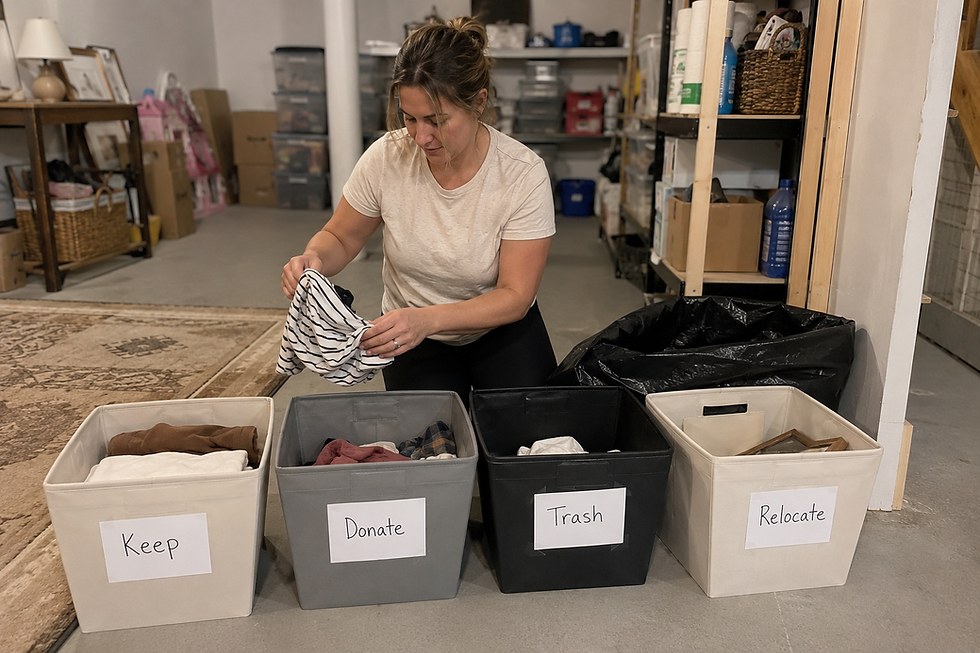
When I decide to declutter a room, I don't try to tackle the entire space at once. I've learned from experience that doing that usually leaves me overwhelmed and ready to quit halfway through.
Instead, I start with one small area. If I'm working in the kitchen, I might choose a single junk drawer. If I'm working in the basement, I might focus on one shelf, one tote, or one corner of the room.
Once I've chosen my area, I take everything out. This helps me see exactly what I'm dealing with and often makes me realize how much unnecessary stuff has accumulated over time.
As I go through each item, I sort it into four simple categories: keep, donate, trash, and relocate. The relocate pile is for things that belong somewhere else in the house.
After I've sorted everything, I put back only the items I'm keeping. Then I move on to the next drawer, shelf, cabinet, or corner.
This method keeps the project manageable and gives me small wins along the way. Even spending fifteen or twenty minutes decluttering a single area is progress.
After sorting and removing what you don't need, a few simple organizing products can help keep everything in its place. My favorite finds are in my Organization & Storage collection. Check it out here!
Ask Yourself a Few Simple Questions
When sorting through belongings, people often overcomplicate the decision-making process. You don't need a complicated system.
As you handle each item, ask yourself a few simple questions.
Do I use this regularly?
Would I buy this again today?
Does this serve a purpose in my home?
If the answer is no to all three questions, it may be time to let it go.
Many of us hold onto items because we spent money on them or because we think we might use them someday. Unfortunately, "someday" often turns into years of storing things we don't actually need.
If you're still unsure what to keep and what to get rid of, my One-Year Decluttering Rule can make those decisions much easier.
Create a Home for Everything You Keep

Decluttering isn't just about getting rid of things. It's also about making sure the items you keep have a designated place.
One reason clutter returns so quickly is because many items never had a proper home to begin with. When something doesn't have a specific place to go, it ends up sitting on counters, tables, and other surfaces.
I've found that simple storage solutions can make a huge difference. Clear storage bins work well for seasonal items, extra household supplies, and keepsakes. Baskets can help contain everyday clutter, while drawer organizers keep smaller items from becoming a jumbled mess.
The goal isn't to buy a bunch of organizing products. The goal is to give everything a home.
For example, batteries can be stored together in a small container instead of being scattered throughout a junk drawer. Seasonal decorations can be grouped into labeled totes. Cleaning supplies can be stored together instead of spread throughout the house.
When every item has a designated place, it's much easier to stay organized because you always know where things belong.
Avoid the "Maybe" Pile
The "maybe" pile often becomes a permanent storage solution for items you're afraid to part with.
While it's completely normal to feel uncertain about certain belongings, too many undecided items can slow down your progress and create more clutter.
If you're struggling to make a decision, place those items in a box and write today's date on it. Store the box somewhere out of sight.
If several months pass and you haven't needed anything from that box, you'll likely feel much more comfortable donating or discarding those items.
The Goal Isn't Perfection
One of the biggest obstacles to decluttering is believing your home has to look perfect when you're finished.
Real homes are lived in. Kids leave backpacks by the door. Laundry piles up. Mail arrives every day. Life happens.
The goal isn't to create a picture-perfect home that never gets messy. The goal is to create a space that functions better, feels less stressful, and is easier to maintain.
By focusing on one room at a time, you can make steady progress without feeling overwhelmed. Before long, those small projects will add up to a home that feels calmer, more organized, and easier to manage every day.
Maintaining Your Progress
One thing I've learned is that decluttering and staying organized are two completely different things.
You can spend an entire weekend decluttering a room, but if things aren't put back where they belong, clutter will slowly start to return.
That's why it's important to develop simple daily habits that help maintain the progress you've made. Spending just a few minutes each day putting things away, clearing counters,
and handling small messes before they become big ones can make a huge difference.
A tidy home isn't usually the result of one big cleaning day. It's often the result of small habits repeated consistently over time.
Quick Decluttering Checklist
Before moving on to the next room, make sure you've completed these steps:
✓ Choose one room to focus on
✓ Start with one small area such as a drawer, shelf, or cabinet
✓ Sort items into keep, donate, trash, and relocate piles
✓ Remove items you no longer need
✓ Give everything you keep a designated home
✓ Use storage bins, baskets, or organizers where needed
✓ Spend a few minutes each day maintaining your progress
Decluttering doesn't require a complete home makeover or an entire week of hard work. Small, consistent efforts often create the biggest results.
Choose one room. Start with one small area. Focus on progress rather than perfection.
As each space becomes more organized, you'll build momentum that makes the next room feel much easier to tackle.
Remember, every organized home starts with a single drawer, shelf, cabinet, or room. The important thing is simply getting started.


Comments